The global demand for pork continues its relentless ascent, fueled by a burgeoning world population and shifting dietary habits. Yet, the very industry tasked with meeting this demand—conventional swine farming—is grappling with a crisis of sustainability and efficiency. The traditional model, largely reliant on manual labor, anecdotal experience, and reactive management, is buckling under mounting pressures that threaten its long-term viability. Labor shortages are becoming endemic in many agricultural regions, while the ever-present threat of disease outbreaks, such as African Swine Fever, looms large, capable of wiping out entire herds and destabilizing global markets. Furthermore, the environmental footprint of large-scale farming, particularly concerning waste management and greenhouse gas emissions, is under intense scrutiny from regulators and consumers alike.
The confluence of these factors—economic, biological, and environmental—underscores a critical truth: the current paradigm is fundamentally unsustainable. The industry has reached an inflection point where incremental improvements are no longer sufficient. A radical transformation, driven by advanced technology, is not merely an option but an urgent necessity to ensure food security, maintain profitability, and adhere to modern ethical and environmental standards.
It is into this challenging landscape that the concept of smart livestock solutions emerges, offering a pathway out of the crisis. At the forefront of this technological wave is Trackfarm, an integrated, AI-powered system designed to revolutionize swine production. Trackfarm combines sophisticated AI-based monitoring with automated environmental control, creating a closed-loop system that minimizes human intervention while maximizing animal welfare and operational efficiency.
This post will conduct a comprehensive comparative analysis, laying bare the inherent inefficiencies and risks of traditional pig farming against the precision, predictability, and profitability offered by Trackfarm’s smart solution. The central thesis is clear: the transition from conventional, labor-intensive methods to an intelligent, data-driven platform like Trackfarm represents a fundamental paradigm shift—a necessary evolution that will define the future of sustainable and profitable swine production globally.
II. The Reality of Traditional Pig Farming
To fully appreciate the transformative power of smart farming, one must first understand the arduous and often precarious reality of the traditional model. For centuries, pig farming has been a deeply labor-intensive endeavor, characterized by a high reliance on human judgment and physical effort for virtually every aspect of the operation.
A. Labor-Intensive Operations and the Human Factor
In a conventional farm setting, the daily routine is dominated by constant, manual monitoring. Workers must physically inspect thousands of animals, looking for subtle signs of illness, aggression, or distress. They manually adjust ventilation systems, check feed levels, and record observations in logs—a process that is not only time-consuming but inherently prone to human error and fatigue. The sheer scale of the operation means that even the most diligent human eye can miss the early warning signs of a looming crisis. This reliance on manual labor is precisely why the industry is so vulnerable to labor shortages; the work is physically demanding, repetitive, and requires a high degree of specialized, on-the-job experience that is increasingly difficult to recruit and retain. In essence, the traditional farm operates with a “99% human work” reality, where efficiency is capped by human capacity.
B. Inefficient Resource Management and Suboptimal Environments
One of the most significant drains on profitability in traditional farming is the inconsistent and often suboptimal management of the barn environment. Environmental control—temperature, humidity, and air quality—is typically adjusted manually based on periodic checks or simple thermostat readings. This reactive, non-dynamic approach fails to account for the minute-by-minute fluctuations caused by external weather, the animals’ metabolic heat, or the build-up of harmful gases like ammonia.
Suboptimal environmental conditions have a direct and detrimental impact on the animals. Pigs under thermal stress or exposed to poor air quality will exhibit reduced feed intake, slower growth rates, and a weakened immune system. This leads to higher feed conversion ratios (more feed required for less weight gain) and, consequently, higher operational costs. The lack of precise, continuous environmental data means that farmers are constantly playing catch-up, wasting resources and failing to maintain the narrow band of conditions necessary for peak animal performance.
C. The High Cost of Risk: Mortality and Delayed Detection
Perhaps the most devastating aspect of traditional farming is the high cost associated with risk, particularly in the form of mortality rates. In a large herd, a disease outbreak can spread rapidly, and the delay between the onset of symptoms and human detection can be fatal for hundreds of animals. Because monitoring is periodic, not continuous, a sick animal may go unnoticed for hours, allowing the pathogen to proliferate and infect others.
The absence of objective, data-driven insights for individual animal management means that critical decisions—such as isolating a potentially sick pig or adjusting the diet of a slow-growing one—are often made too late. This reactive approach to health management results in elevated veterinary costs, increased use of antibiotics, and, most critically, a higher overall herd mortality rate, which directly erodes the farm’s bottom line.
D. The Challenge of Prediction: Guesswork in a Data-Driven World
In the modern agricultural economy, precision and predictability are paramount. Traditional farming, however, operates largely on guesswork and accumulated experience rather than hard data. Farmers lack the tools to accurately predict key milestones, such as the optimal time for an individual pig to be sent to slaughter. Sending an animal too early sacrifices potential weight gain, while sending it too late increases feed costs unnecessarily.
Without continuous data on individual growth curves, feed intake, and activity levels, farmers are forced to rely on visual estimation or batch-level averages, which leaves significant money on the table. This lack of data-driven prediction is a fundamental limitation that prevents traditional farms from achieving the hyper-efficiency and optimization required to compete in the 21st-century global market.
The challenges of traditional farming—the unsustainable labor demands, the inefficient resource use, the high-risk environment, and the lack of predictive capability—collectively paint a picture of an industry ripe for disruption. The next section will explore how Trackfarm’s AI and automation technologies directly address and resolve these deep-seated issues.
III. Trackfarm’s Technological Revolution: Precision and Automation
Trackfarm is not merely a collection of sensors; it is a holistic, AI-driven smart livestock solution engineered to fundamentally redefine the economics and ethics of swine production. Its design philosophy is centered on two core principles: achieving near-total automation of routine monitoring and environmental management, and leveraging data to enable hyper-precise, predictive decision-making.
A. Core Philosophy: AI-Driven Automation
The goal of Trackfarm is to minimize the need for human labor in the most repetitive and error-prone tasks, thereby freeing up farm managers to focus on strategic oversight and animal welfare. By integrating advanced software and hardware, the system aims to replace the “99% human work” of traditional farming with a highly efficient, automated process. This shift drastically reduces labor costs, mitigates the risk of human error, and ensures a consistently optimal environment for the livestock. The result is a system where one manager can effectively oversee a herd of 3,000 or more animals, a feat unimaginable in a conventional setting.
B. Feature Deep Dive 1: AI Monitoring (Software)
The heart of Trackfarm’s intelligence lies in its AI Monitoring software. This system utilizes advanced computer vision and data mining techniques to provide continuous, individual-level management of the herd, effectively giving every pig a dedicated, 24/7 digital caretaker.
The AI performs several critical functions that surpass human capability:
- Individualized Management and Growth Analysis: The system continuously tracks the population of pigs, monitoring individual growth rates, activity levels, and behavioral patterns. By analyzing these metrics, the AI can identify pigs that are falling behind their growth curve or exhibiting subtle signs of distress long before a human observer would notice.
- Predictive Analytics for Optimal Harvest: One of the most significant economic advantages is the AI’s ability to predict the precise optimal slaughter timing for each pig. By analyzing the individual’s growth trajectory against market and cost data, the system ensures that every animal is harvested at its peak economic value, maximizing yield and minimizing unnecessary feed consumption.
- Labor Reduction and Efficiency: The AI’s ability to handle pig counting, growth analysis, and health monitoring means that it effectively replaces 99% of the manual monitoring tasks traditionally performed by farm workers. This is the key to the system’s scalability and its ability to drastically cut operational costs.
The data generated by this continuous monitoring is presented to the farm manager through an intuitive, cloud-based dashboard, transforming complex biological data into actionable insights.

C. Feature Deep Dive 2: Automated Environmental Control (Hardware)
Complementing the AI software is a robust, automated hardware system designed to maintain the perfect living conditions for the pigs, a crucial factor in reducing stress, preventing disease, and promoting rapid growth.
- Comprehensive Sensor Network: Trackfarm deploys a network of high-precision sensors throughout the barn. These sensors continuously monitor all critical environmental factors, including temperature, humidity, and the chemical environment (e.g., ammonia and carbon dioxide levels). Crucially, the system also monitors biological factors, such as air flow and the presence of harmful pathogens, creating a complete picture of the barn’s health.
- Dynamic Optimization: Unlike simple thermostats, Trackfarm’s system uses the continuous sensor data to dynamically and automatically control the barn’s infrastructure. This includes the precise adjustment of ventilation fans, heating elements, and opening/closing systems. If a sudden spike in ammonia is detected, the system immediately increases ventilation in the affected zone, preventing the harmful gas from reaching dangerous concentrations. This proactive, real-time adjustment ensures the environment remains within the narrow, optimal range required for peak animal health and growth.
- Unprecedented Scalability: The combination of automated monitoring and control is what allows a single manager to oversee 3,000 or more animals. The system acts as a force multiplier, handling the minute-to-minute management so the human staff can manage by exception, intervening only when the AI flags a specific, high-priority issue.

D. The Underlying Technology Stack
Trackfarm’s power is rooted in a sophisticated technology stack that transforms raw data into economic value:
- Data Mining: Massive amounts of continuous data from sensors and video feeds are collected and processed to identify subtle patterns indicative of health, growth, and environmental stress.
- Cloud Analytics: All data is processed in the cloud, allowing for complex, large-scale computations and the application of machine learning models that would be impossible on local farm hardware.
- Optimization Algorithms: These proprietary algorithms are the engine of the system, constantly calculating the most efficient settings for environmental controls and the most profitable timing for management decisions.
- Guideline and Alert Systems: The system provides real-time, actionable guidelines and alerts to farm staff, ensuring that human intervention is timely, targeted, and based on objective data rather than subjective observation.
By replacing manual labor with AI and guesswork with predictive analytics, Trackfarm fundamentally shifts the farm’s operational model from reactive management to proactive optimization. The next section will quantify this shift by directly comparing the performance metrics of the traditional model against the Trackfarm solution.
IV. Comparative Analysis: Traditional vs. Trackfarm
The true measure of any technological solution is its quantifiable impact on key performance indicators (KPIs). When comparing the traditional farming model with the Trackfarm smart solution, the differences are not marginal; they represent a fundamental restructuring of the farm’s operational and economic profile.
A. The Data Speaks: Efficiency, Cost, and Output
The following table provides a clear, side-by-side contrast of how the two models perform across critical areas of swine production. The data highlights how Trackfarm directly addresses the inefficiencies inherent in the conventional approach, translating technological superiority into economic advantage.
| Feature | Traditional Farming | Trackfarm Smart Solution |
|---|---|---|
| Labor Requirement | High (Constant manual monitoring, physical labor) | Minimal (AI replaces 99% of monitoring tasks) |
| Management Ratio | Low (Limited animals per manager, high fatigue) | High (3,000+ animals per manager possible) |
| Slaughter Cycle | Variable/Longer (Based on average estimation) | Shortened (Optimized by AI predictive analysis) |
| Mortality Rate | High (Delayed disease detection, environmental stress) | Significantly Reduced (Early AI alerts, optimal environment) |
| Environmental Control | Inconsistent (Manual, reactive adjustment) | Optimal (Automated, sensor-driven, proactive) |
| Data Insight | Anecdotal/Experience-based, subjective | Data Mining, Cloud Analytics, Predictive Modeling |
| Return on Investment (ROI) | Lower, constrained by labor and risk | Higher, driven by efficiency and yield optimization |
Analysis of the Comparison
The implications of this comparison are profound. The most immediate and significant impact is on labor efficiency. By shifting the burden of continuous monitoring to AI, Trackfarm transforms the role of the farm manager from a physical laborer to a data-driven decision-maker. This allows for an exponential increase in the management ratio, directly tackling the industry’s labor crisis.
Furthermore, the combination of AI-driven predictive analytics and automated environmental control leads to a dramatic reduction in operational risk. The early detection of health issues and the maintenance of a perfect climate minimize stress and disease, which is the primary driver of mortality. A lower mortality rate, coupled with a shortened slaughter cycle—achieved through AI-optimized growth conditions and timing—directly translates into higher throughput and a superior return on investment. Traditional farming is constrained by its reliance on human capacity and subjective judgment; Trackfarm is scaled by the power of cloud computing and objective data.
B. Visualizing the Impact: The Trackfarm Advantage
To truly grasp the magnitude of this transformation, a visual representation is invaluable. We propose an infographic concept titled “The Trackfarm Advantage: Before and After,” designed to illustrate the workflow and outcome differences between the two systems.
Infographic Concept: The Trackfarm Advantage
The visual would be a side-by-side flow diagram. The “Before” side (Traditional) would show a chaotic, labor-intensive process: a human worker manually checking pigs, adjusting a vent, and then reacting to a disease outbreak. The key metrics would be displayed with red, upward-pointing arrows (High Labor, High Mortality, Long Cycle).
The “After” side (Trackfarm) would show a streamlined, automated process: AI cameras and sensors feeding data to a cloud icon, which then automatically controls the ventilation and sends a single, precise alert to a manager’s tablet. The key metrics would be displayed with green, downward-pointing arrows (Minimal Labor, Low Mortality, Short Cycle). The visual contrast would powerfully communicate the shift from a high-risk, reactive system to a low-risk, proactive, and optimized one.

This visual representation underscores the core value proposition: Trackfarm is not just about technology; it is about delivering predictability and optimization to an industry that has historically been defined by uncertainty and risk. The final piece of the puzzle is to examine how this technology performs in the real world, across diverse geographical and environmental conditions.
V. Real-World Validation: Case Studies in Global Swine Production
The theoretical advantages of Trackfarm’s technology are powerfully validated by its performance in diverse, real-world farming environments. The system has proven its adaptability and efficacy across different climates, operational scales, and local challenges, demonstrating that the future of smart farming is already here.
A. Case Study 1: South Korea (Hoengseong Farm)
The initial deployment of Trackfarm in South Korea provided compelling evidence of its ability to optimize operations in a developed, high-cost agricultural market. At a farm in Hoengseong, Gangwon-do, managing a herd of over 2,000 pigs, the implementation of the AI-driven solution yielded immediate and significant results.
The farm successfully achieved a measurable shortening of the overall breeding cycle. This was a direct consequence of the AI’s ability to maintain consistently optimal environmental conditions and precisely predict the ideal slaughter weight, eliminating the guesswork that often leads to prolonged feeding periods. Furthermore, the farm experienced a substantial reduction in labor and associated costs, as the AI took over the bulk of the monitoring tasks. Most critically, the system’s early detection capabilities led to a marked decrease in the herd’s mortality rate, protecting the farm’s most valuable assets. The Hoengseong case study serves as a benchmark for how Trackfarm can drive efficiency and profitability in established, modern farming operations.
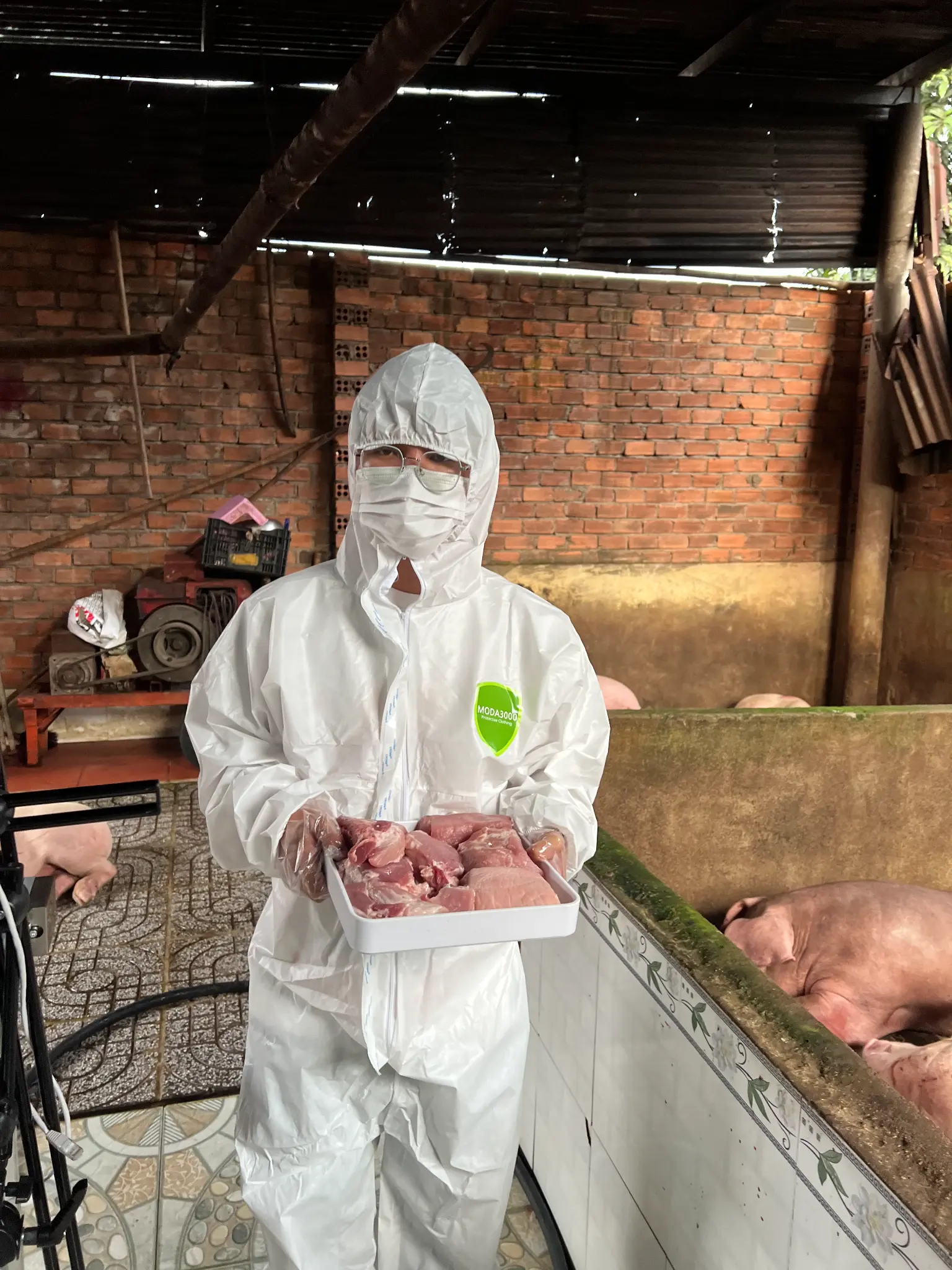
B. Case Study 2: Vietnam (Dong Nai Farm)
The challenge in Vietnam was different: adapting a high-tech solution to a tropical climate with unique environmental variables. At a large-scale farm in Dong Nai, Ho Chi Minh, managing over 3,000 pigs, Trackfarm demonstrated its technological flexibility.
The local environment, characterized by high heat and humidity, poses significant challenges for maintaining animal health and comfort. Trackfarm’s Automated Environmental Control system was crucial here. By continuously monitoring temperature, humidity, and chemical levels, and dynamically adjusting the ventilation and cooling systems, the solution ensured that the pigs were raised in conditions perfectly optimized for their well-being, despite the external climate. The result was the successful implementation of a high-quality breeding program that was specifically optimized for the local Vietnamese environment. This case study proves that Trackfarm is not a one-size-fits-all solution but a dynamically adaptive platform capable of delivering peak performance anywhere in the world.
VI. Conclusion: The Future of Swine Production
The comparison between traditional pig farming and Trackfarm’s smart solution reveals a clear and undeniable divergence. The traditional model, defined by its reliance on manual labor, subjective judgment, and reactive management, is increasingly unsustainable in the face of modern economic and environmental pressures. It is a system constrained by human limitations and vulnerable to catastrophic risk.
Trackfarm, conversely, represents the future of swine production. By leveraging AI for continuous, predictive monitoring and automation for dynamic environmental control, it transforms the farm into a highly efficient, data-driven operation. The benefits are comprehensive: unprecedented labor efficiency, significantly reduced mortality rates, optimized growth cycles, and a higher return on investment. The successful case studies in South Korea and Vietnam are not isolated incidents; they are proof points that this technology is scalable, adaptable, and ready to meet the global demand for sustainable and profitable pork production.
The necessity for the industry to embrace smart farming is no longer a matter of competitive advantage—it is a matter of survival. As the world seeks more ethical, efficient, and resilient food production systems, solutions like Trackfarm will be the essential foundation upon which the next generation of successful swine farms is built. The time for incremental change is over; the era of the AI-driven farm has begun.